
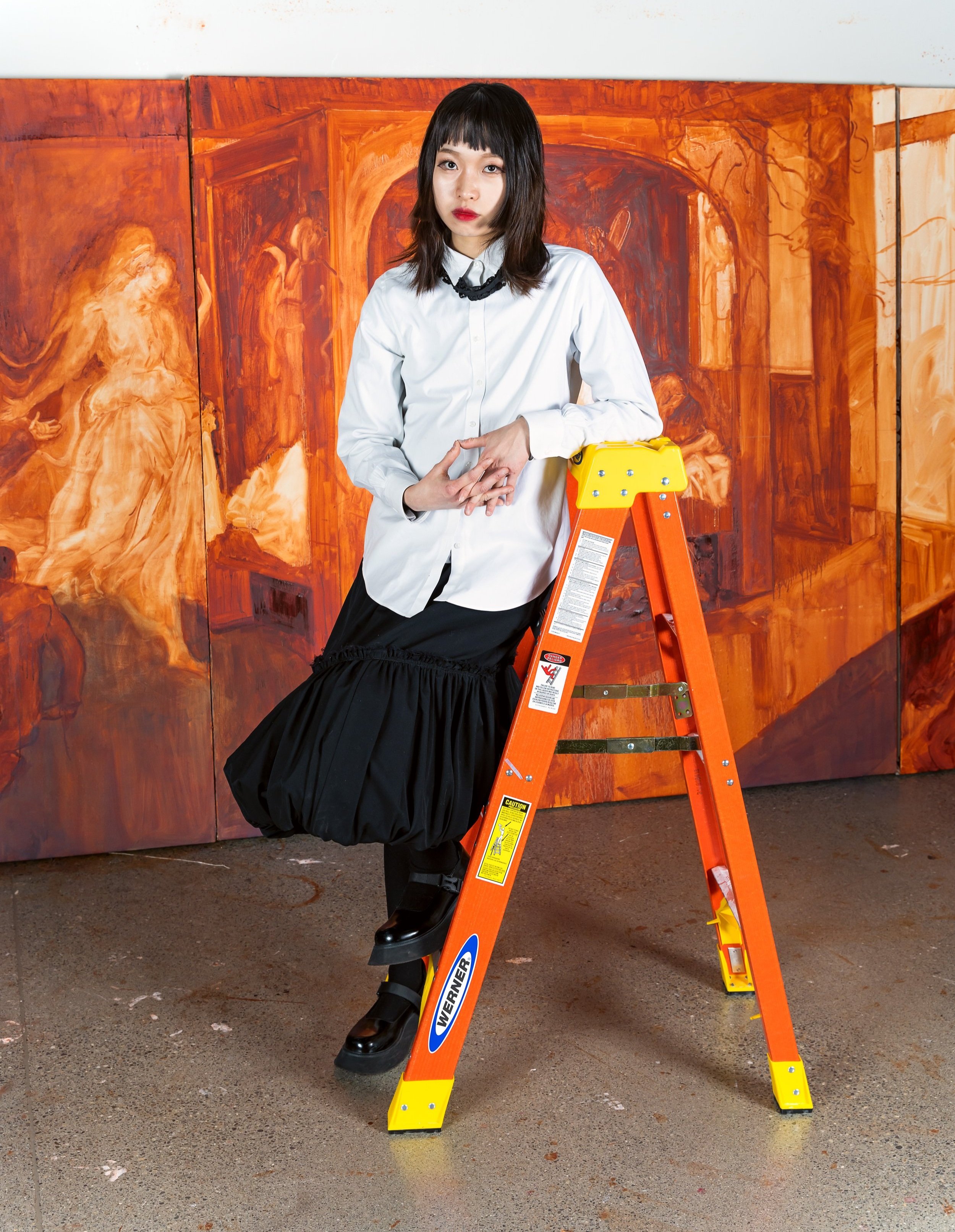
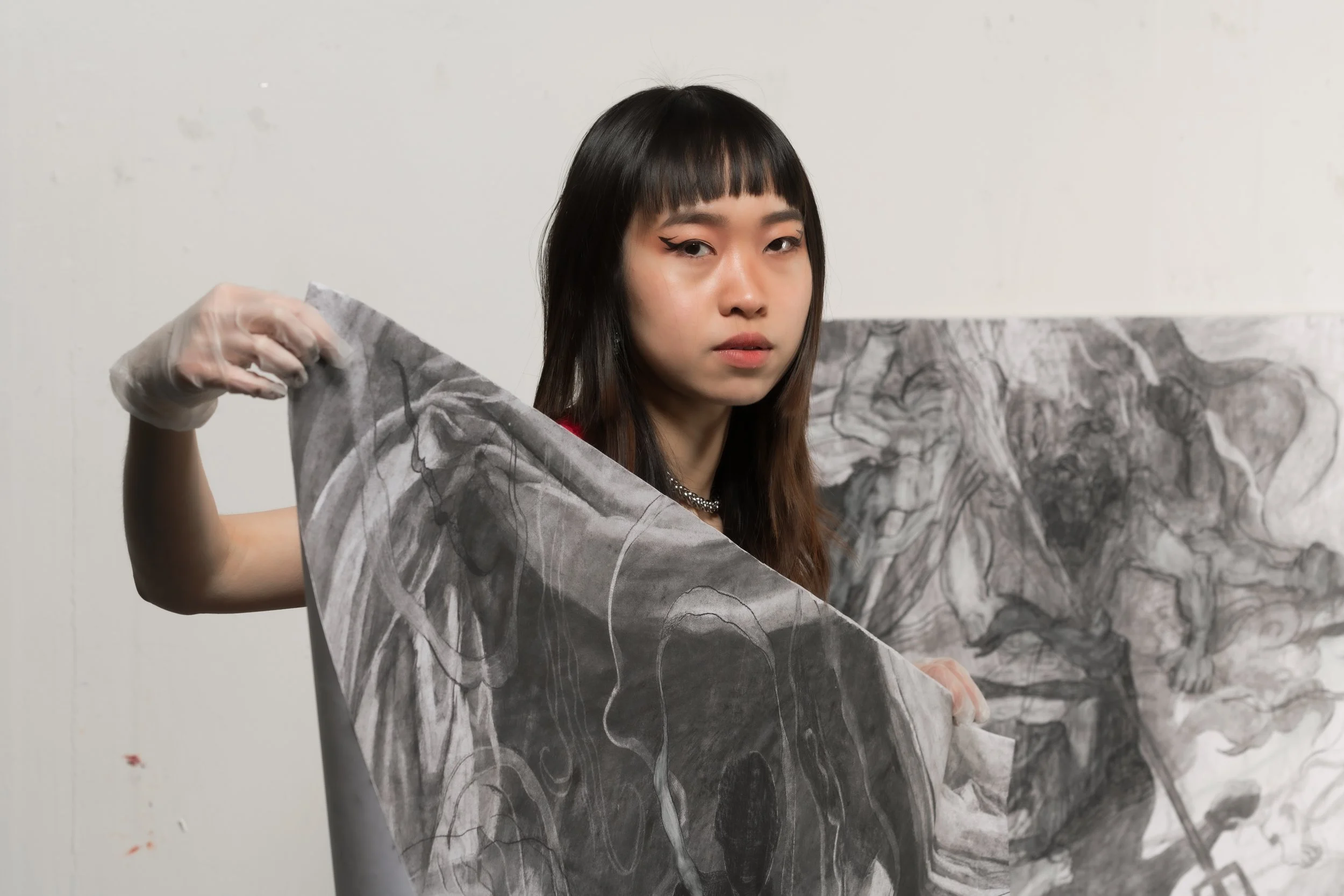
Yongqi Tang (b. 1997, Shenzhen, China) has been featured in solo and group exhibitions at T293, Rome, Italy; David Zwirner Platform April Online Viewing Room, Specialist Gallery, Seattle, WA; Latitude Gallery, New York, NY; Strada World, New York, NY; and Jacob Lawrence Gallery, Seattle, WA, among others. Tang is based in Seattle, Washington. She is also a selected featured artist in the upcoming no.163 issue of New American Painting.
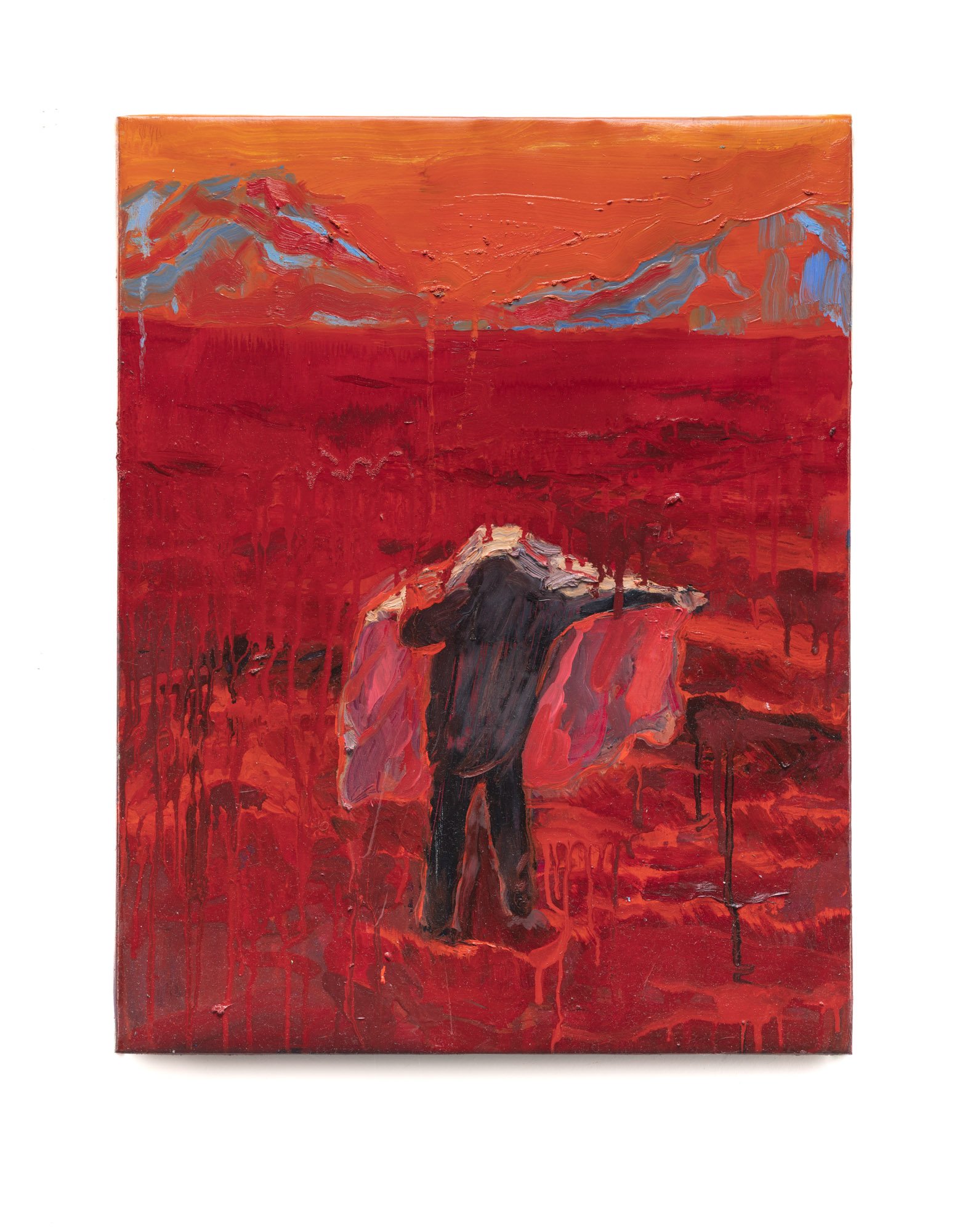
Yongqi Tang, And Then, They Turned and Walked to the Sea, 2022, Oil on canvas, 24 by 18 in. 60.96 by 45.72 cm. (YT013)
Lullaby
Yongqi Tang
05.25.2023 - 06.24.2023
Jupiter is pleased to present Lullaby, an exhibition of new works by Yongqi Tang that draw upon disparate art historical references from the West to East Asia—and the Middle Ages to the present day—in order to investigate the constructs of identity, cultural specificity, and the modalities of painting.
Please note the exhibition will be on view by appointment only starting May 24, 2023 and will open to the public on May 28, 2023. To make an appointment, please contact gaby@jupitercontemporary.com.
Public reception:
May 28, 2023 | 6-8pm
1217 71st Street, Miami Beach, FL 33141
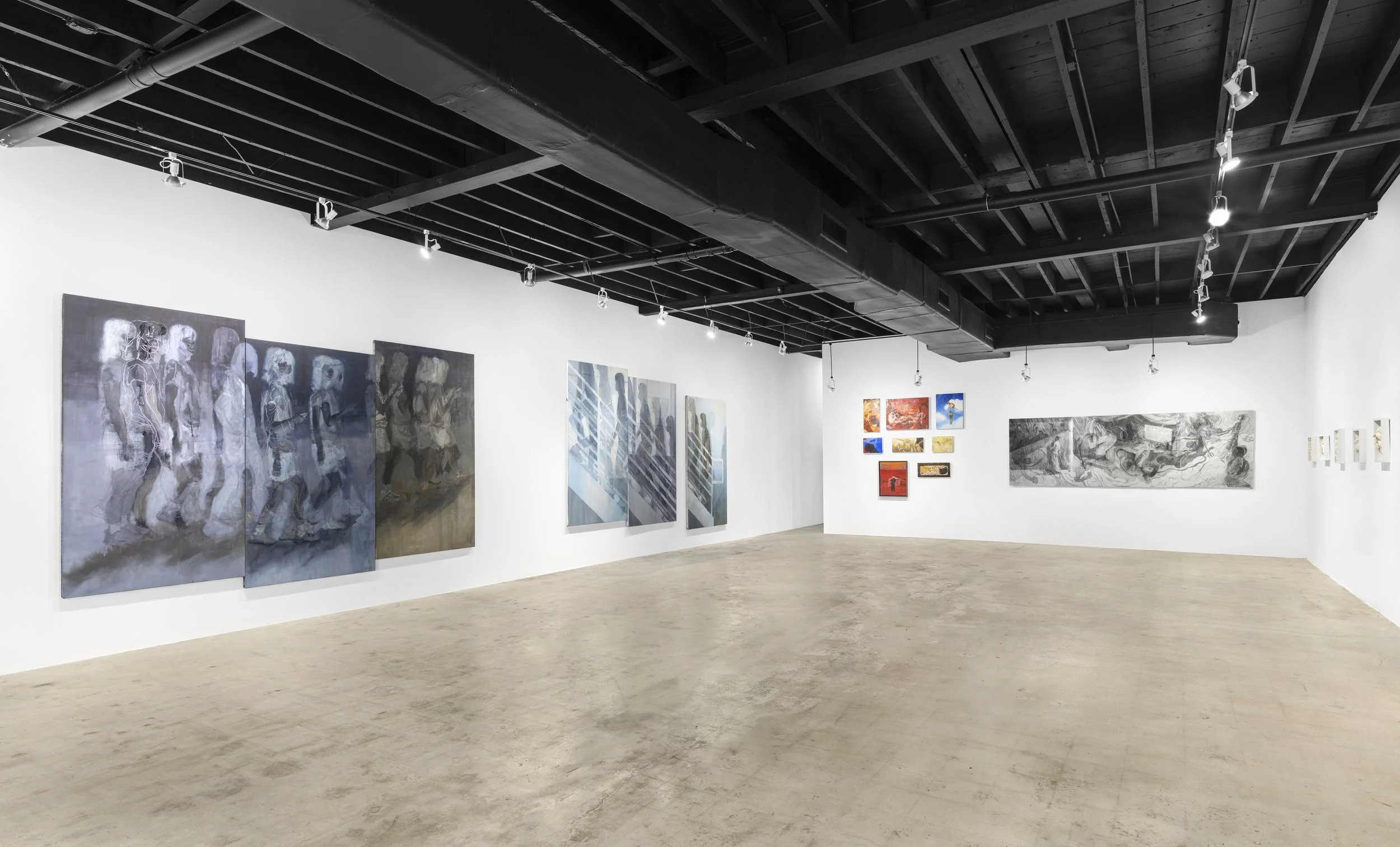
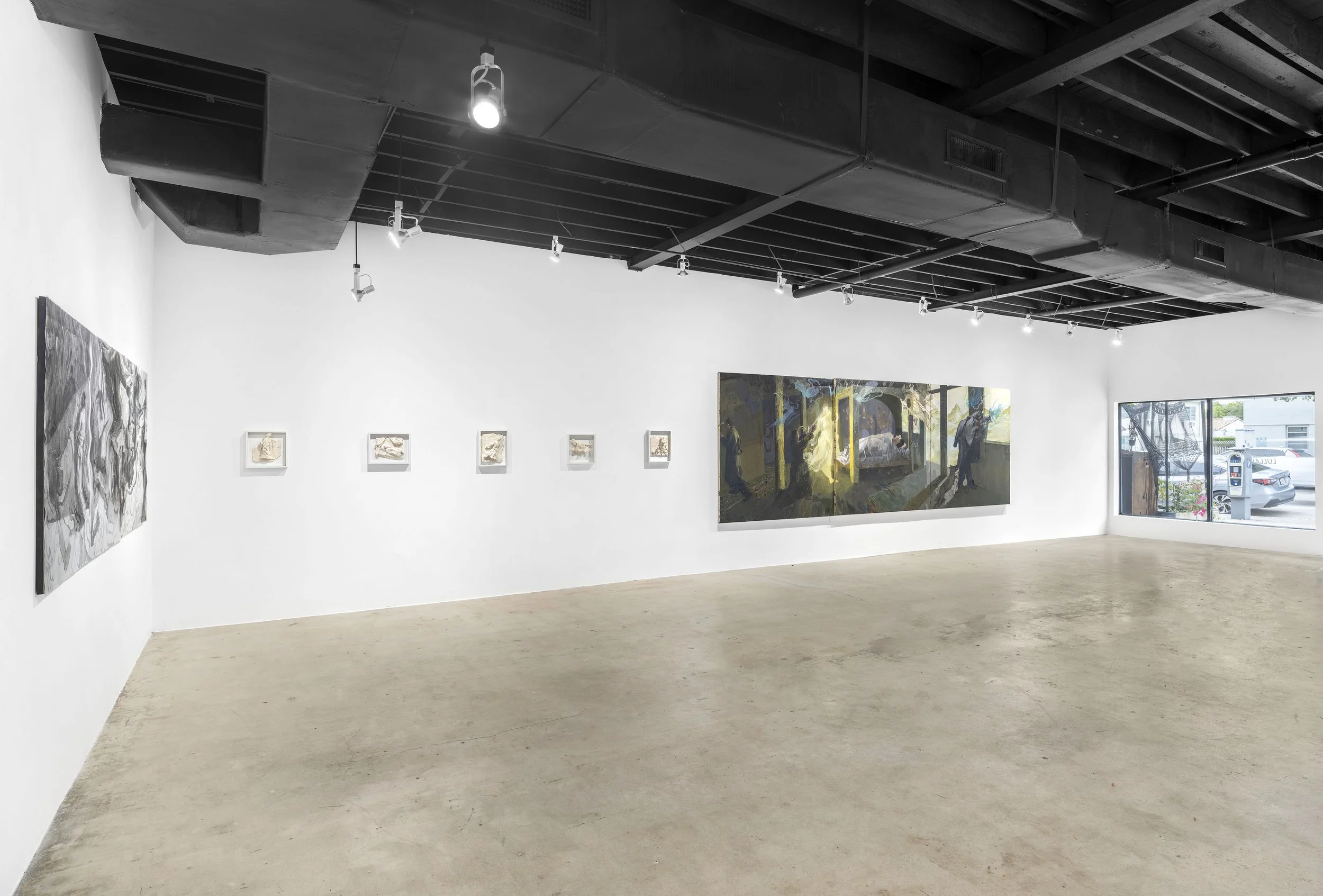
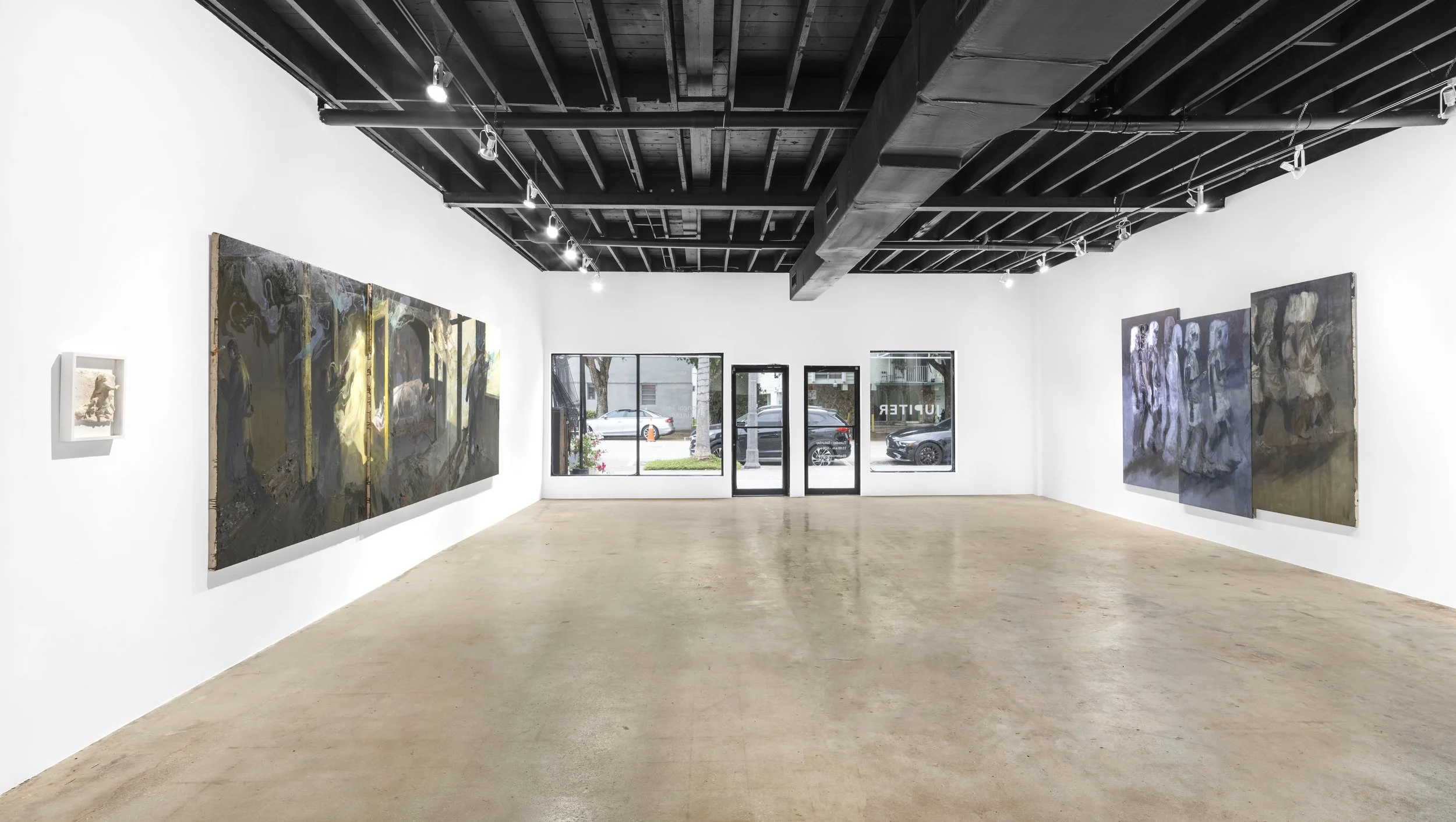
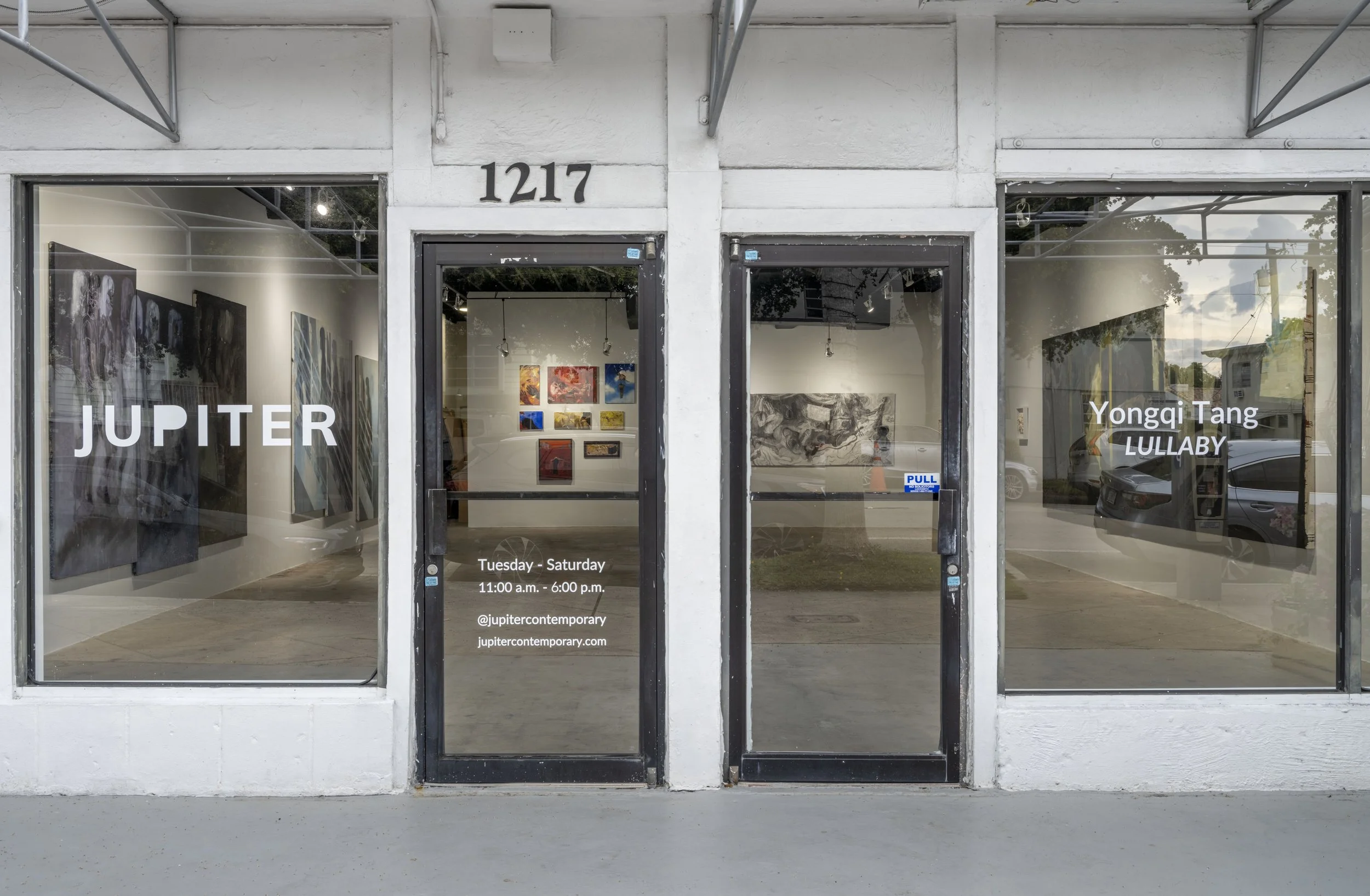
Featuring painting, drawing, and sculpture, the exhibition visually articulates the breadth of Tang’s practice and the ways in which her process of creating each large-scale painting involves the articulation of its subject in multiple media, each iteration of which results in a distinct work. Displayed in conjunction, these works, which range widely in size and style, evidence the artist’s practice of thinking through not only her medium and subjects, but also her artistic identity and a desire to not be beholden to any one visual language.
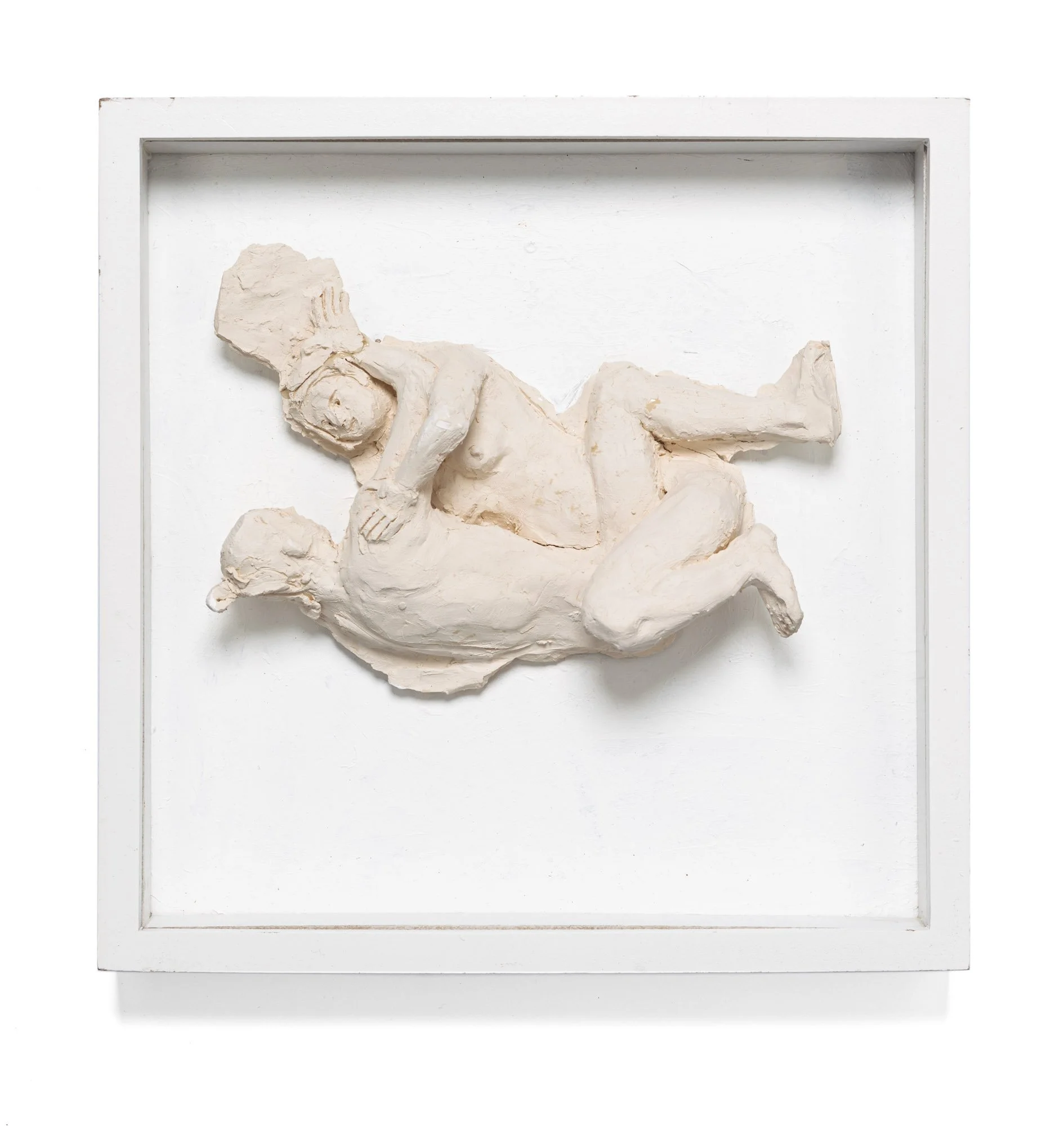
Yongqi Tang, Ceramic Study 1 for Strange Tales: The Painted Wall, 2022, Ceramic relief mounted in shadow box, 12 by 12 by 3.5 in. 30.48 by 30.48 by 8.9 cm. (YT027)
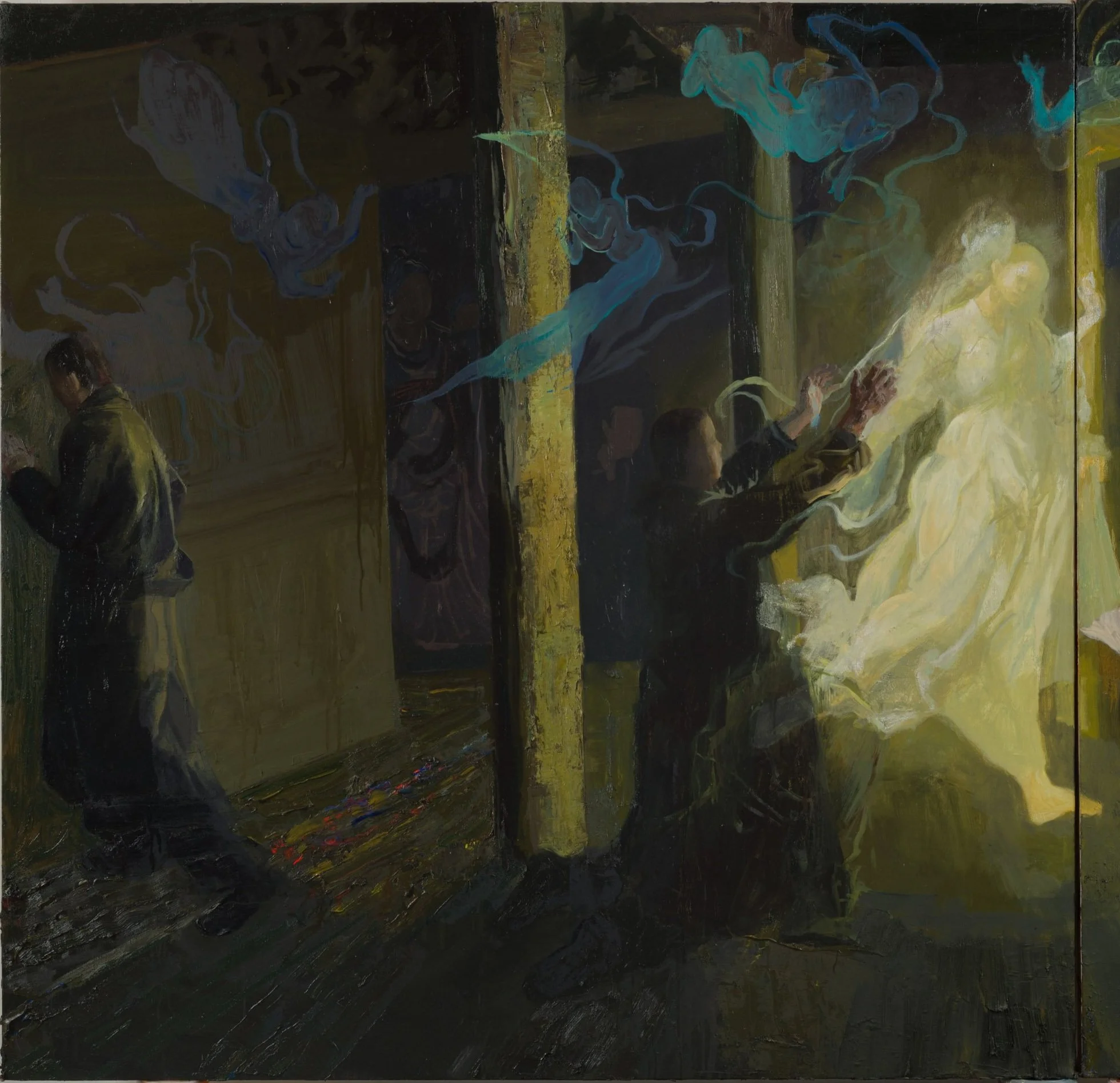
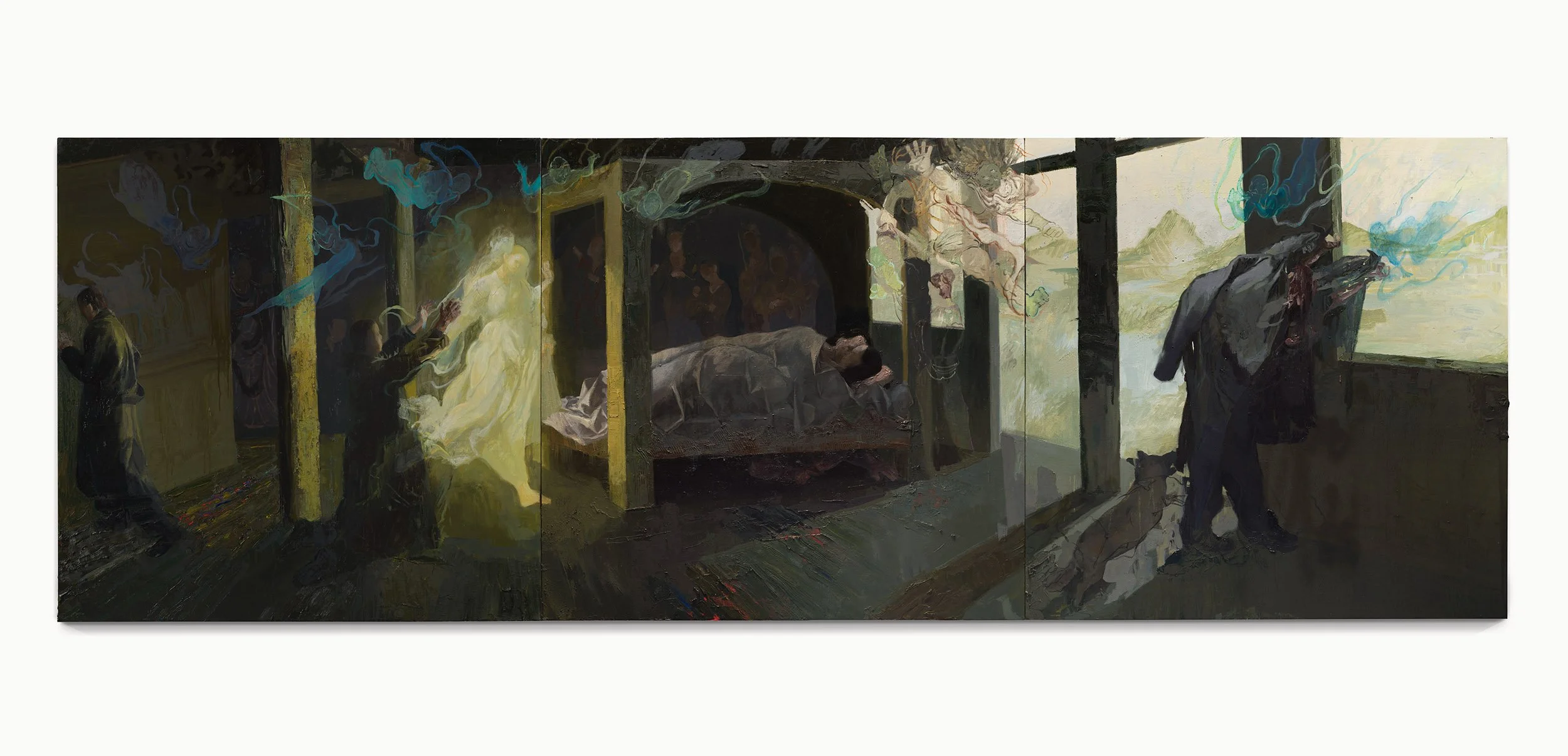
Detail shot of Yongqi Tang, Strange Tales: The Painted Wall, 2023, Oil on canvas, 72 by 216 (72 by 72 in. per panel) 182.88 by 548.64 cm (182.88 by 182.88 cm. per panel) (YT031)
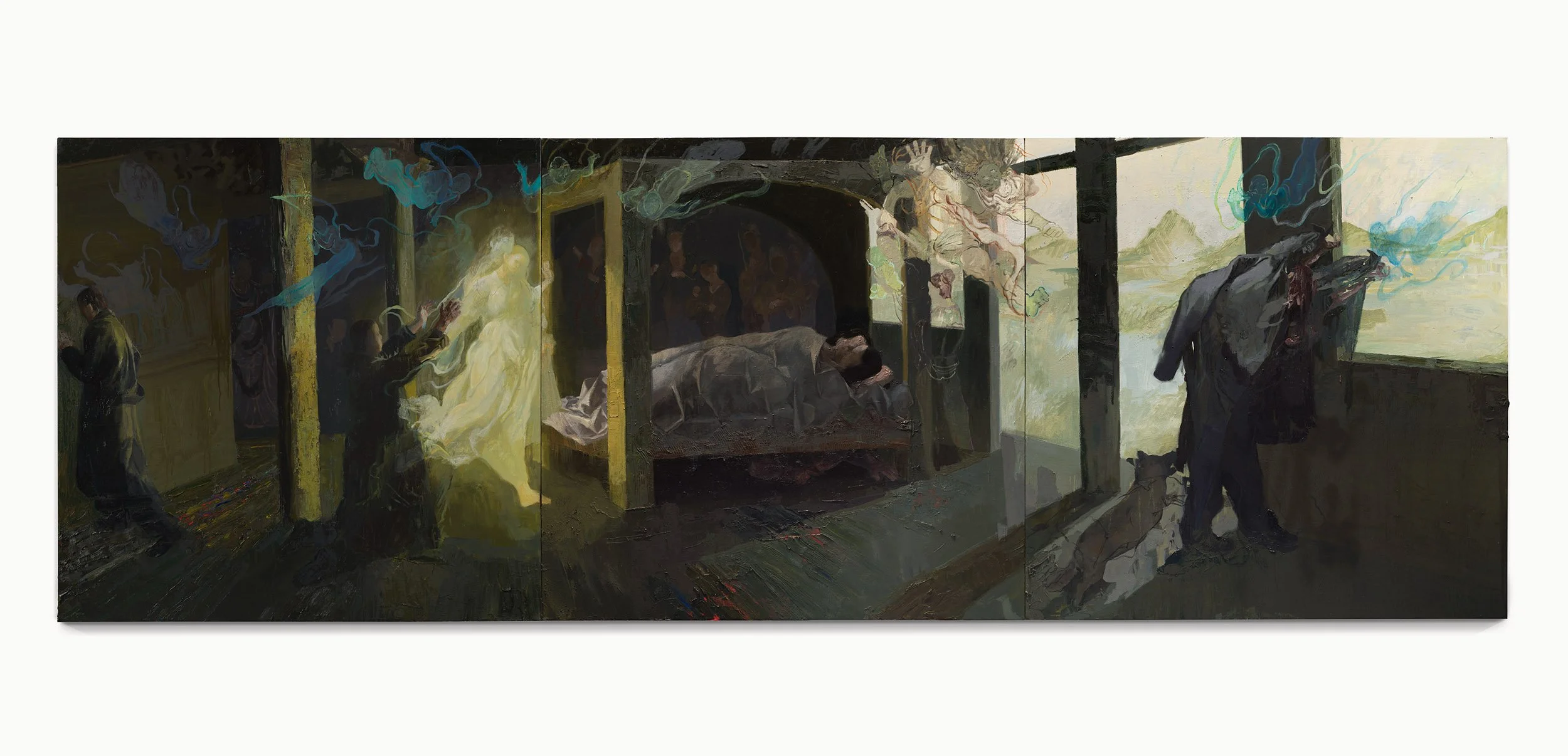
The centerpiece of the exhibition, Strange Tales: The Painted Wall (2023), exemplifies this process as it was preceded by three charcoal drawings of the same name that hang together as a triptych and four intimately scaled ceramic works. Instead of painting from photographs, Tang has increasingly cultivated her imagery solely from her imagination, enhancing its often surreal and abstracted manifestations. Despite this move away from source material, after beginning with a series of sketches, the artist renders her compositions in charcoal and ceramic as the latter, in particular, provides a three-dimensional reference from which to compose her paintings in oil.
While Tang’s practice is thus highly self-reflexive, so too is the relationship she’s established between the subject and form of Strange Tales. Inspired by “The Painted Wall,” a tale from a 1700s-era book of Chinese ghost stories, this monumentally scaled painting illustrates the story about a Chinese scholar who ventured into a temple and became so enraptured by a mural that he stepped into it and fell in love with the woman pictured therein. Tang collapses this narrative into one composition in a manner reminiscent of Renaissance frescos: at the far left the man stands in front of the painted wall, farther to the right he becomes infatuated with the beautiful woman who glows like a beacon, at the center the man and woman make love in a bed, under which the man also hides when chased by the painting’s guardian, and at the far right he attempts to escape back into the real world.
By visualizing the narrative on a horizontal painting of this magnitude that echoes the form of a Chinese scroll, Tang fuses art historical references which, though being culturally and historically disparate, have served to shape her own identity as an artist. The result serves as an analogy for the effect of painting itself, as viewers of Tang’s work ultimately take on a position similar to that of the man depicted: they become enveloped by its breadth and pulled into its depths by the enchanting glow of the young woman.
Such a collaging of references also manifests in a series of more intimate works that similarly feature art historical allusions but are rather executed in a diverse set of styles and techniques. This ongoing series, entitled Wild Strawberries, thus provides a framework within which Tang can experiment. By reimagining canonical paintings—for example transforming Saturn Devouring His Son (1819–1823) by Francisco Goya into a self-portrait of the artist, and Édouard Manet’s Luncheon on the Grass into a vision bathed in red—Tang celebrates experimentation and difference.
When taken together, the works on view channel an unexpectedly cohesive vision via Tang’s weaving together of history and personal experience into a visual language all her own. The exhibition thus not only offer a glimpse into her process but also, what may very well be, her unconscious. Led from one surreal composition to the next, wherein familiar peoples, places, and sights merge with the unfamiliar, viewers may find themselves ensconced in Tang’s vivid world of waking dreams.
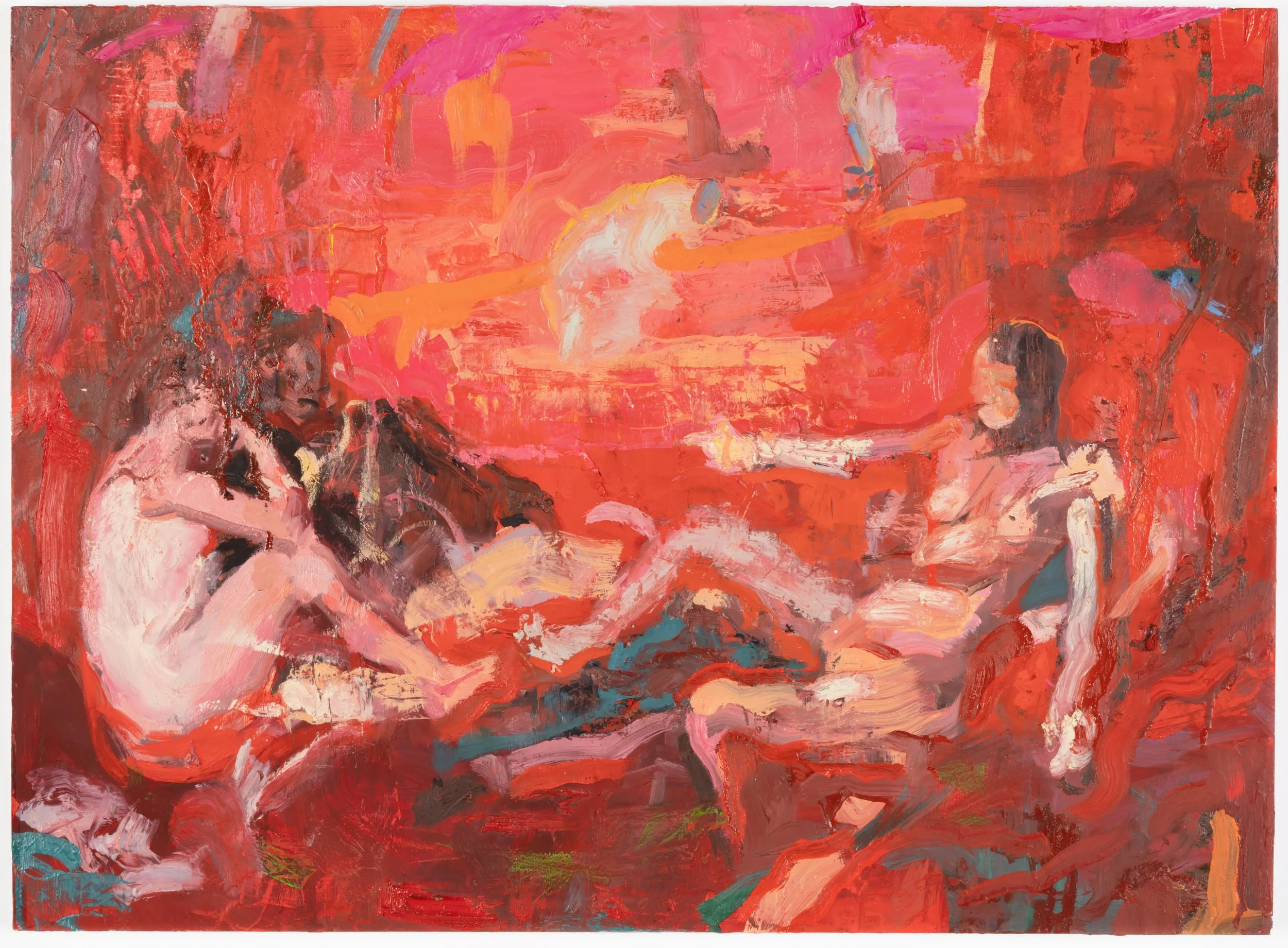
Yongqi Tang, Wild Strawberries (After Luncheon on the Grass), 2023, oil on panel, 22 by 30 in. 55.88 by 76.2 cm. (YT009)
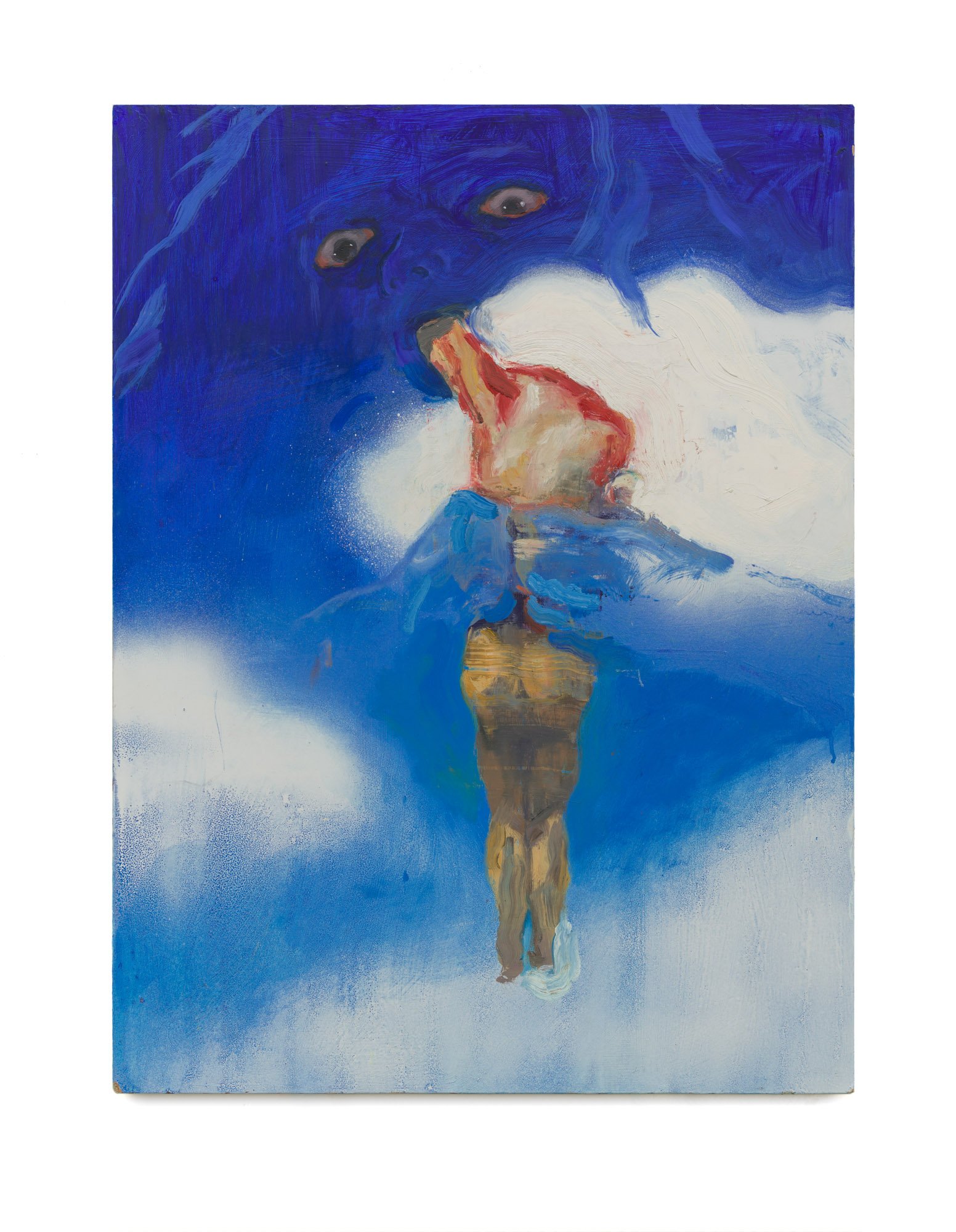
Yongqi Tang, Self Portrait as a Butcher(after Goya), 2022, Oil on panel, 24 by 18 in. 60.96 by 45.72 cm. (YT022)
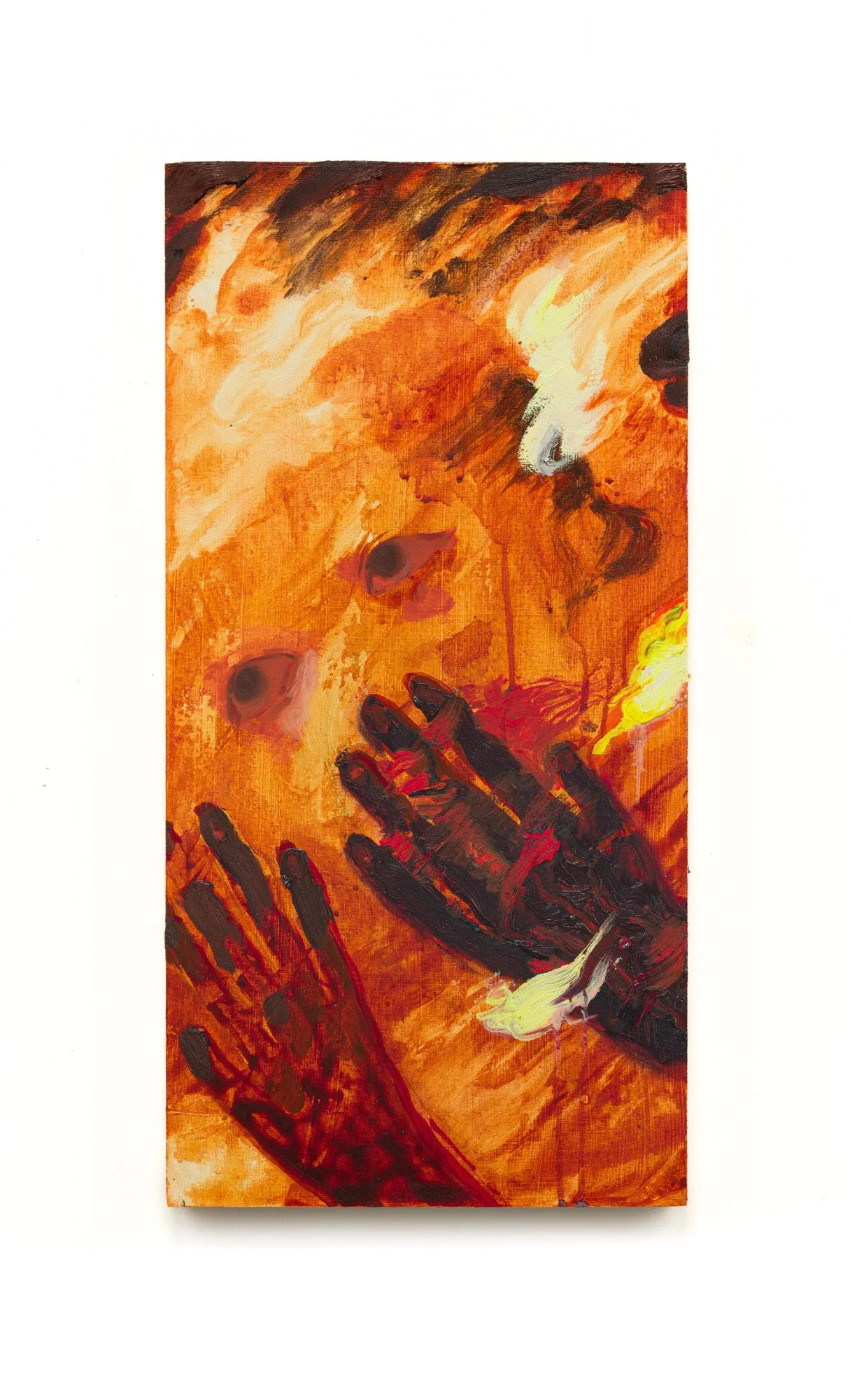
Yongqi Tang, The Burning Violet in April, 2022, Oil and acrylic on panel, 24 by 12 in. 60.96 by 30.48 cm. (YT021)
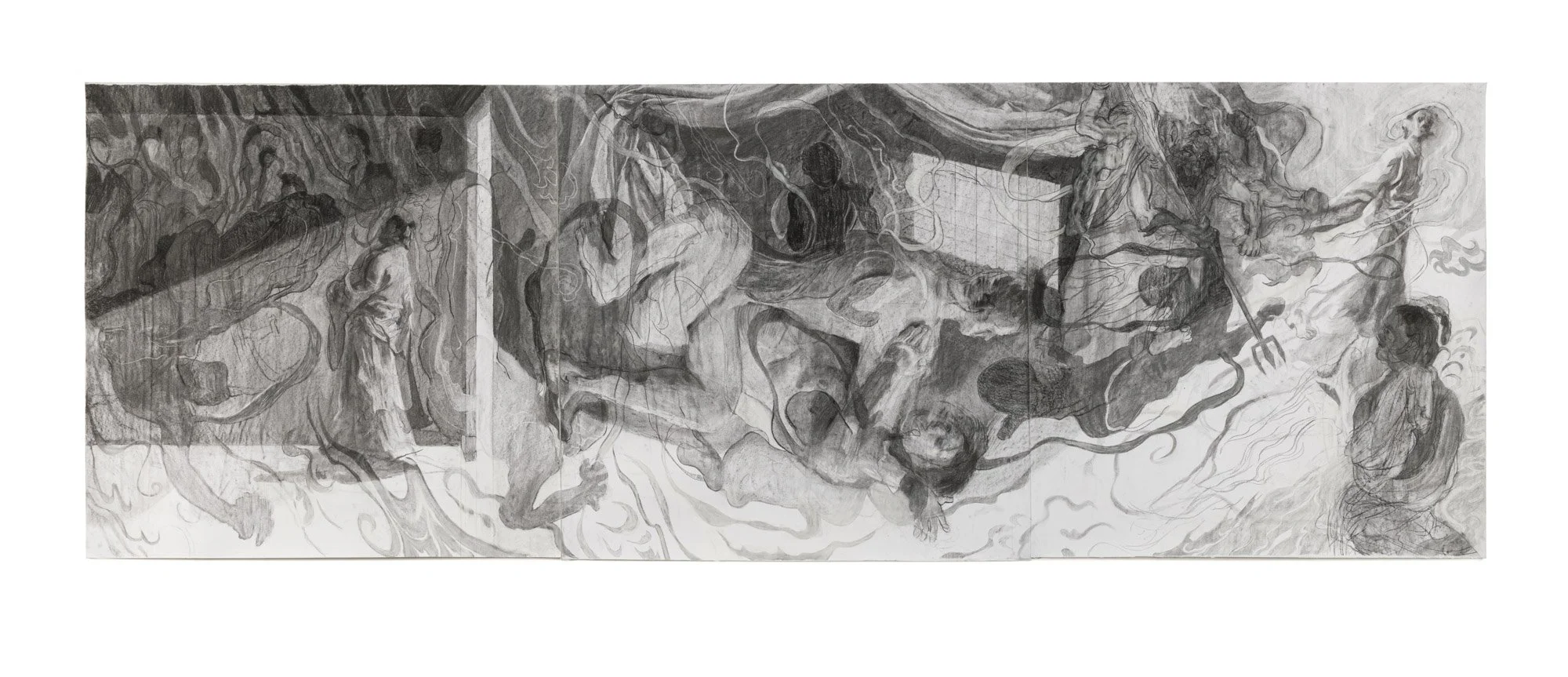
Yongqi Tang, Strange Tales: The Painted Wall No.1. Part.i, ii., & iii., 2022, Charcoal on paper, 43 by 129 in. 109.22 by 327.66 cm. (YT033, YT023, YT024)
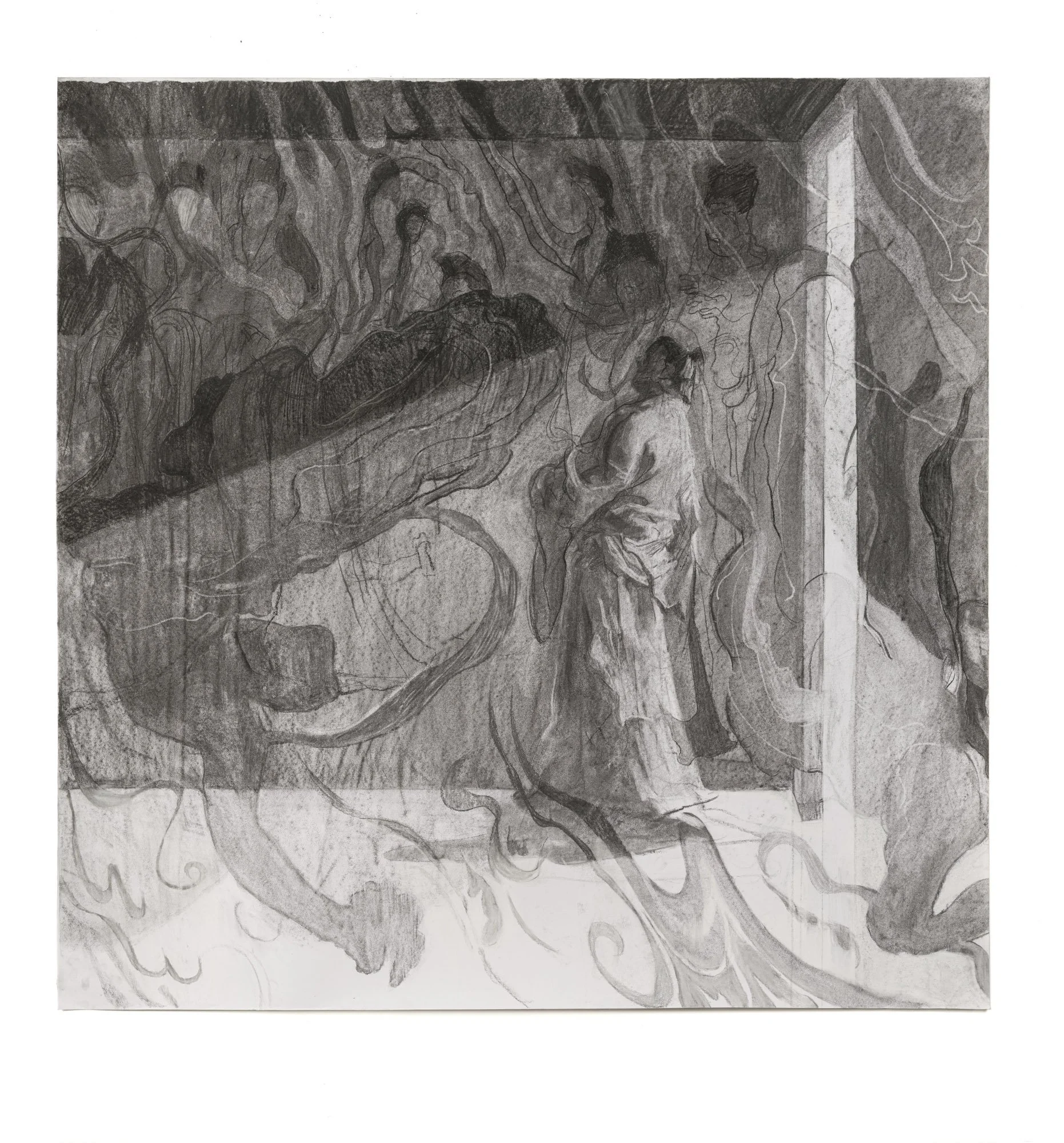
Yongqi Tang, Strange Tales: The Painted Wall No.1 Part.i, 2022, Charcoal on paper, 43 by 43 in. 109.22 by 109.22 cm. (YT033)
Lullaby, Yongqi Tang
05.25.2023 - 06.24.2023
On view by appointment: 05.25.2023-05.27.2023
Public Opening Reception: 05.28.2023 | 6 - 8 pm
Copyright © 2023 Yongqi Tang, Jupiter, Mikey Baratta and Mario Gallucci.
All rights reserved. No part of this publication may be reproduced, distributed or transmitted in any form or by any means without the prior written permission of the copyright owner, except for the use of brief quotations embodied within a book review.