
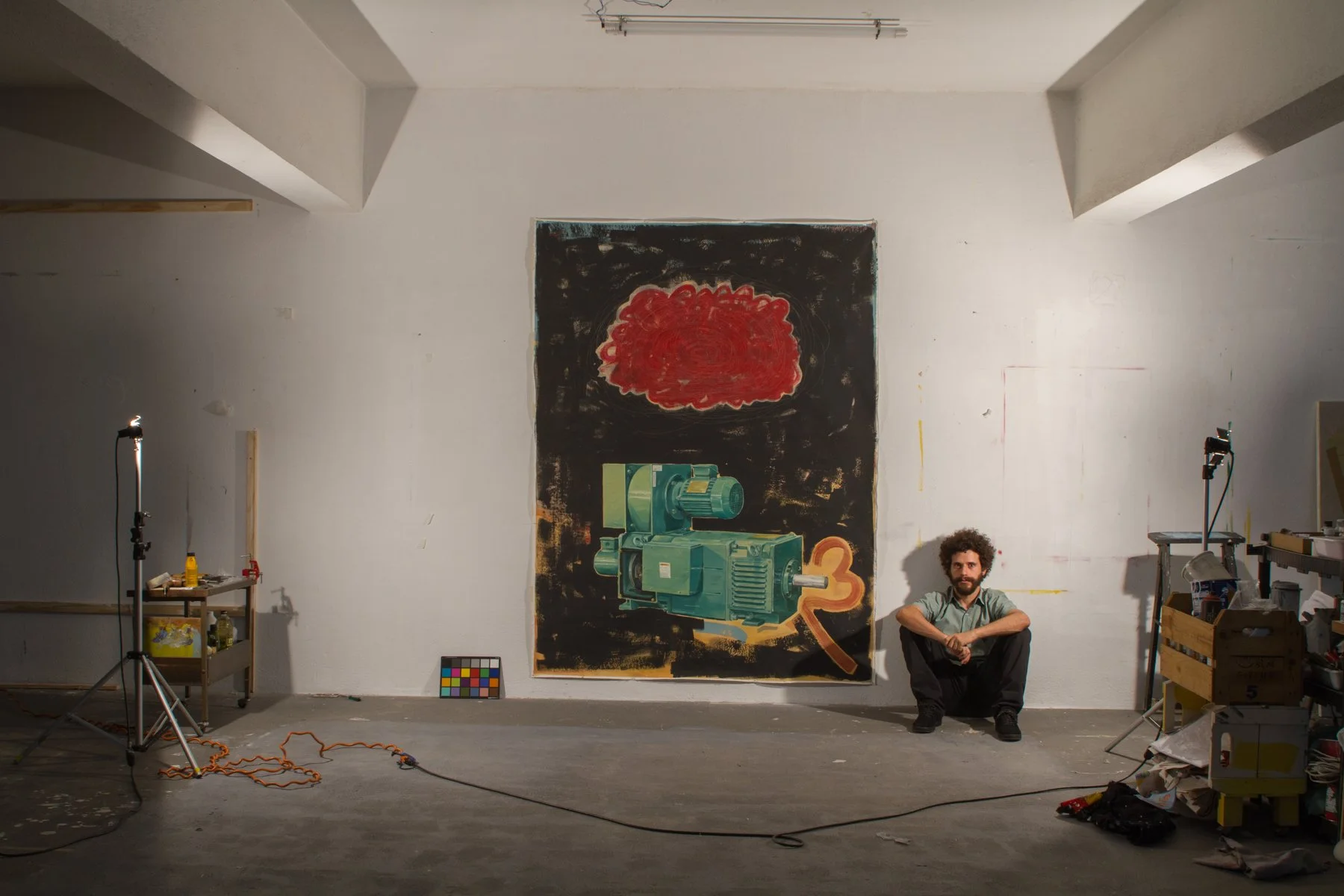
Fábio Menino (b. 1989, São Paulo, Brazil) employs the medium of painting to address quotidian issues related to consumption, the economy, and their social relations. His paintings are particularly motivated by an interest in form and the symbolic charge that objects carry. Menino has worked as an assistant to artists Paulo Nimer Pjota, Hildebrando de Castro, and Stephan Doitschinoff. His paintings have been exhibited at the Rio Art Museum, Rio de Janeiro, Brazil; Paço das Artes, São Paulo, Brazil; and Sesc Ribeirão Preto, Ribeirão Preto, Brazil; among others. He received the acquisition award from the 45th Luiz Sacillotto Contemporary Art Salon, São Paulo, Brazil and his work is included in the collection of the Museu de Arte do Rio, Rio de Janeiro, Brazil.
.

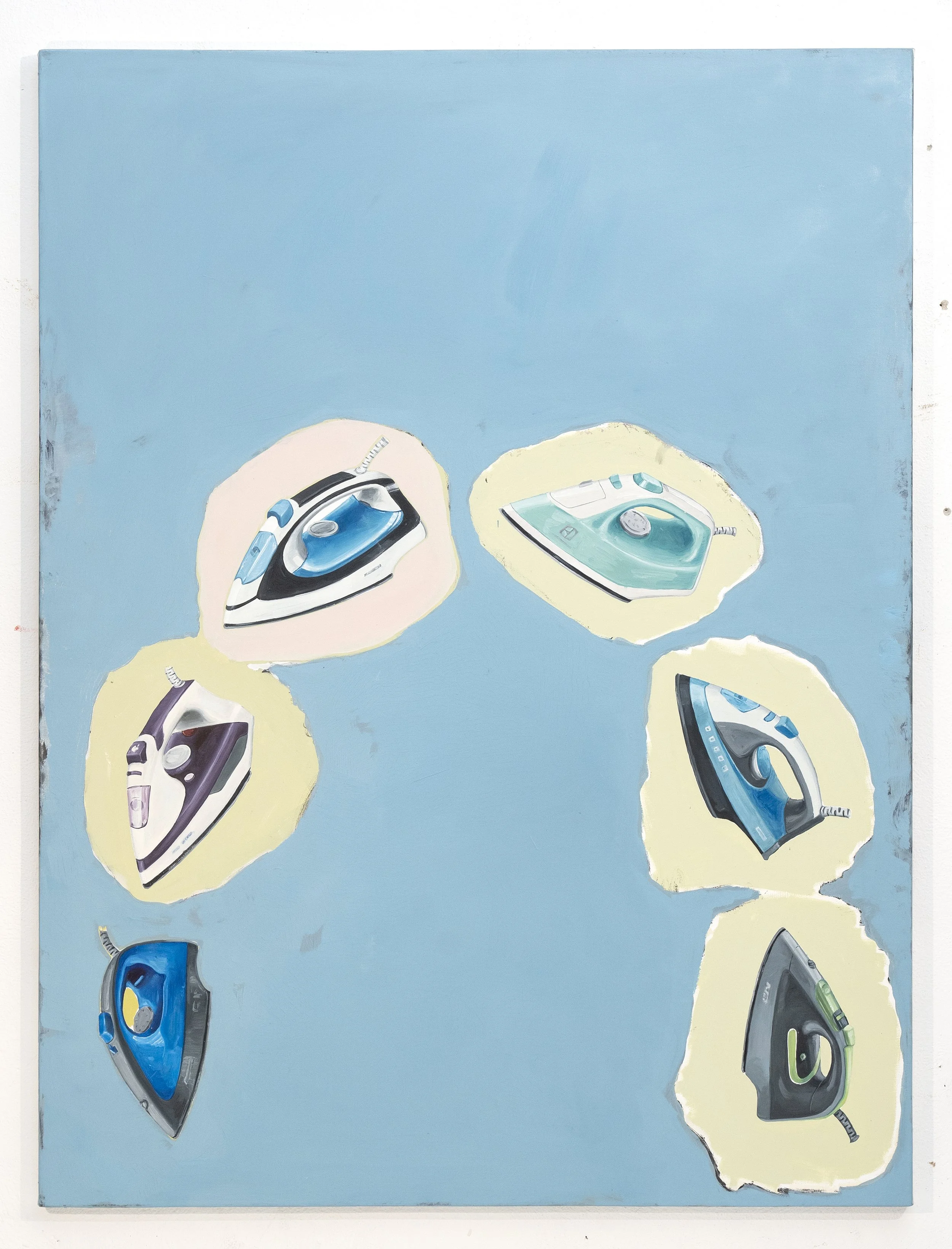
Fábio Menino Ferros de Passar Roupa, 2022 oil on canvas 62.72 by 47.24 by 1.57 in. 159.30 by 120 by 4 cm.
Sourcing product imagery from the internet, and the Google shopping platform in particular, Menino chooses objects to feature in his paintings largely based on their quotidian utility, but also on their design and the way in which advertisements aestheticize, and perhaps even nullify, functionality. Clothes Irons (2022), for example, depicts six aesthetically distinct irons on a neutral blue background, highlighting the way in which consumerism has thoroughly supplanted choices regarding function with those regarding style.
Volkswagen x Ford x Fiat x Chevrolet x BMW (2019), articulates a similar phenomenon by picturing five steering wheels floating amid a solid yellow-ocher field. Such decontextualization serves to highlight the similarities and subtle differences in design between these nearly identical objects, yet ultimately draws one’s attention to the brand logo emblazoned at the center of each wheel. The associations conjured by these symbols are reflective of the power of advertising and its trenchant influence on consumer habits—compelling buyers to choose, with a sense of brand loyalty, between items that carry negligible differences and serve the exact same purpose. Advertising imagery, like that which Menino uses as his source material, often contextualizes the intended use of the objects or tools it features and aims to capture the attention of a particular consumer audience. Menino’s paintings, however, illustrate—by isolating the featured objects and omitting their context—that brand associations are so powerful that these same objects can still conjure allusions to identity, class, and even ethnicity when removed from the marketing campaigns that produce such narratives and associations.
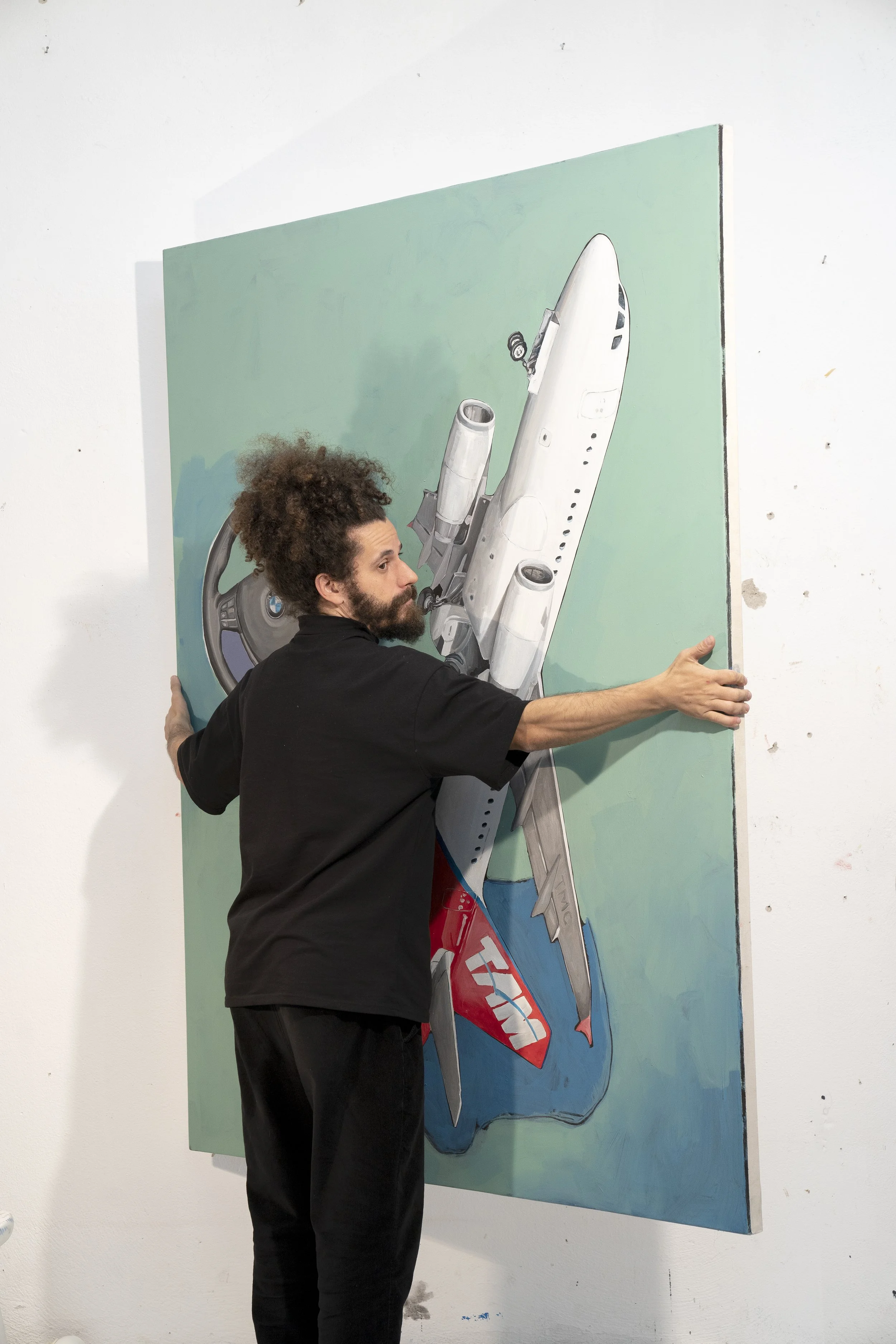
Within the exhibition, a juxtaposition can be observed between objects that are branded and highly aestheticized—steering wheels, Kitchenaid mixers, and motorcycle helmets—and those, such as a wheelbarrow, saw, or broom, that allow utility to determine their design. Though the latter so often remain unnoticed, Menino depicts them in the same aestheticized manner, highlighting and accentuating the elegance, efficiency, or simply the overlooked ubiquity of their utility. This could be seen as an inherently political gesture, as objects associated with the working class are elevated and placed in dialog with those of high-end consumer culture.
In all instances, the objects Menino selects for his compositions are those which perform a function the human body cannot replicate on its own—tools that provide protection, enhance speed, and even enable habitability. A rather intimate relation is thus revealed between human and machine, as viewers survey Menino’s highly alluring paintings of those objects which make contemporary culture possible.
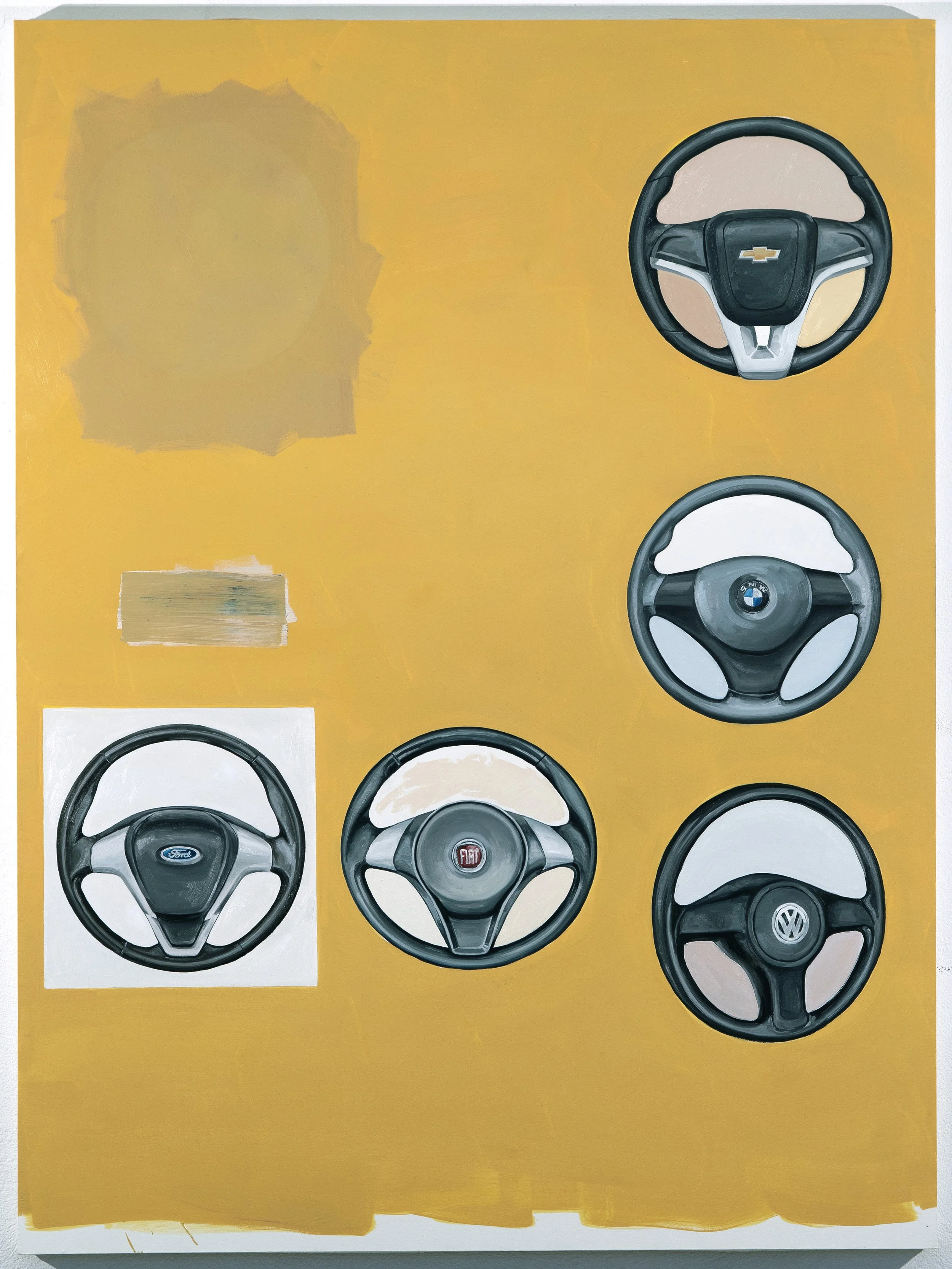
Fábio Menino, Volkswagen x Ford x Fiat x Chevrolet x BMW, 2019, oil on canvas, 78.35 by 58.66 by 1.57 in.
199 by 149 by 4 cm.
Bateria Arriada (Low Battery), Fábio Menino
07.17 - 08.20.2022
Opening Reception: 07.17.2022 | 6 - 8 pm
Jupiter Contemporary is pleased to present Low Battery, Fábio Menino’s first solo exhibition in the United States, featuring X new and never-before-seen paintings that compel a consideration of the relationship between our functional needs and material desires by foregrounding the aesthetic appeal, streamlined design, and seductive advertisements of utilitarian objects.